Top Water Damage Restoration in Birmingham, MI, 48009 | Compare & Call
There are 176 water damage restoration companies server in Birmingham MI
Metro Water Damage Restoration Rochester
Metro Water Damage Restoration Rochester is a licensed damage restoration company serving Rochester Hills, Michigan. We specialize in fire damage restoration, flood remediation, and mold remediation, ...

Max Out Mold Removal, based in Howell, MI, is a family-owned business dedicated to protecting homes from toxic mold and black mold. Unlike many in the industry, owner Mike saw how mold remediation com...

Ivory Property Restoration
Ivory Property Restoration in Troy, MI, provides emergency restoration services including water damage restoration, mold removal, sewage cleanup, and site cleanup. Our team of experts handles water ex...

When your Burton home or business faces disaster—whether from flooding, fire, smoke damage, or a traumatic event—ServiceMaster Restoration Services - Flint is here to help. Located just off E Bristol ...

Friendly Hills Restoration, based in Rochester Hills, MI, is a full-service damage restoration and environmental abatement company founded by Lucas, a certified technician with over 10 years of experi...

Premier Restoration has been a trusted name in Livonia and the surrounding areas for over 30 years, starting as a family-owned business that treats every customer like part of the family. We specializ...
SERVPRO of Northeast Macomb Township
SERVPRO of Northeast Macomb Township in Macomb, MI provides comprehensive damage restoration, carpet cleaning, and environmental abatement services. As part of the nationwide SERVPRO network with over...
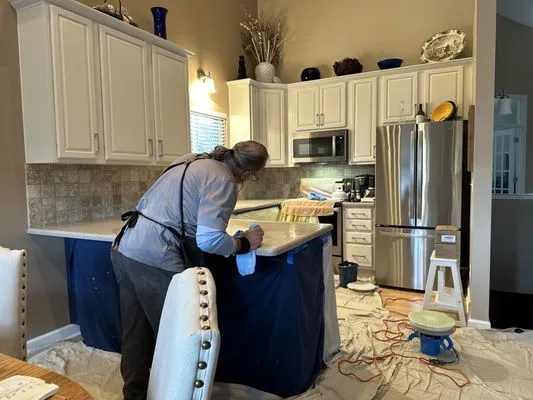
Since 2001, Solid Surface Restorations in Macomb, MI, has specialized in the repair and restoration of solid surface countertops, including Corian and Wilsonart. Serving both residential and commercia...

LaFountain Tree Specialists, owned and operated by Chris LaFountain in Oakland, MI, brings a legacy of hard work and reliability to tree care and damage restoration. Chris inherited his work ethic fro...

MJ White
Since 1979, MJ White has been the trusted partner for damage restoration, biohazard cleanup, and environmental abatement in Novi and across Southeastern Michigan. We treat every disaster as if it were...
Estimated Water Damage Restoration Costs in Birmingham, MI
FAQs
What should I do the second I discover a major water leak?
Your first action is to stop the water flow. Locate and shut off the main water valve. For properties near Shain Park, know that rapid utility shut-off is the critical first step in 'loss of use' mitigation. Then, contact DTE Energy for electrical safety if water nears outlets or the panel. Do not enter standing water if electricity is present. This immediate containment protocol preserves structural integrity and forms the basis of your timestamped incident report for insurance.
What kind of proof does my 2026 insurance adjuster require for the claim?
2026 adjusters and platforms like Xactimate require forensic-level documentation. This includes GPS-tagged, timestamped moisture maps, OCR-readable moisture meter logs, and psychrometric data charts. Every reading must be digitally linked to the job file to create an irrefutable chain of custody. This protocol is now standard to validate the S500 standard of care was met and to prevent claim denials based on insufficient evidence of proper drying.
My floor feels dry to the touch. Why isn't my water damage considered 'dry'?
'Dry to the touch' is a sensory illusion. The IICRC S500 standard defines 'dry' by psychrometric equilibrium, not surface moisture. In Downtown Birmingham's climate, structural materials must be dried to a vapor pressure equilibrium of 40 Grains Per Pound (GPP) at 70°F. Subflooring, wall cavities, and concrete slabs retain moisture long after surfaces appear dry, creating a reservoir for mold and rot. We validate dryness with thermo-hygrometers and invasive probes, not touch.
How fast can a crew get to my location in Downtown Birmingham?
Our emergency response protocol for the Downtown Birmingham area targets a 15-25 minute arrival. From our central staging near Shain Park, crews route via I-75 for rapid access to the entire municipality. This dispatch logic is designed to meet the critical 48-hour mitigation window. Upon your call, we initiate mobilization and provide real-time ETA tracking to ensure the drying process begins within the standard of care timeframe.
Birmingham is in Flood Zone X. Why does that matter for my basement leak?
Zone X denotes a minimal flood hazard from external sources. However, 2026 FEMA Risk MAP updates emphasize that internal plumbing failures are the leading cause of loss in these zones. This rating impacts structural drying protocols; while external flooding isn't the primary risk, basements and crawlspaces still require aggressive dehumidification to counter Michigan's ambient humidity and prevent secondary damage from internal leaks, which are far more common.
My Birmingham home was built in 1959. Are there special rules for the restoration work?
Yes. The EPA's Renovation, Repair, and Painting (RRP) rule mandates lead-safe practices for any pre-1978 structure. Since your 1959 home exceeds the 1958 asbestos and lead cutoff, legally mandated testing is required before any demolition or disruptive drying. The Birmingham Building Department will not approve permits without an EPA-certified firm managing the work. This is not optional; it's a federal regulation to prevent lead dust and asbestos fiber dispersal.
How long do I have before mold becomes a serious problem?
The microbial amplification window is 48-72 hours from the initial water intrusion in a Category 2 Grey Water event. By 2026, insurance carriers and litigation have clearly established this as the standard of care. If professional mitigation does not begin within this window, liability for subsequent mold remediation often shifts to the property owner. Immediate action to control humidity and extract water is not a recommendation—it is a procedural necessity to limit loss.
What's the difference between 'Clean,' 'Grey,' and 'Black' water in an insurance claim?
Category 1 ('Clean') water is from a sanitary source. Your incident involves Category 2 ('Grey') water, which contains significant contamination and requires antimicrobial treatment. Category 3 ('Black') water is grossly contaminated, like sewage. This classification directly impacts coverage and remediation scope. Proactive installation of IoT leak sensors (e.g., Moen Flo) can reduce premiums by 5-8% in Michigan, as they provide early detection, preventing a Category 1 event from degrading to Category 2 or 3.
